

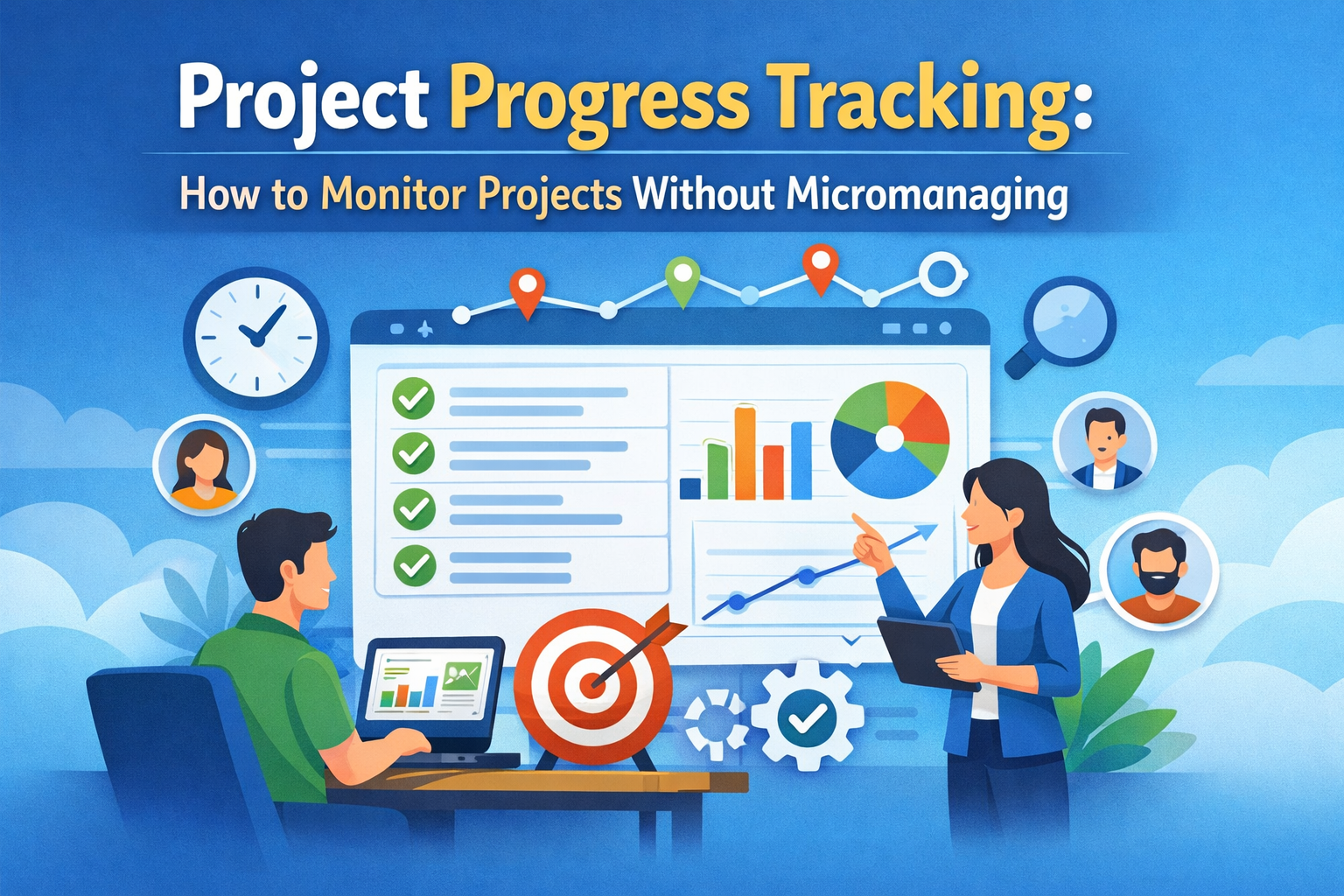
How to Track Project Progress Without Micromanaging Your Team.
Project tracking is one of the most important responsibilities of a project manager. It ensures deadlines are met, risks are identified early, and teams stay aligned with project goals. However, there is a significant difference between effective project monitoring and micromanagement.
When managers constantly ask for updates, monitor every task, or question every decision, team members often feel they are not trusted. This can reduce motivation, lower productivity, and create unnecessary stress.
Successful project managers don’t watch every action—they build systems that provide visibility while giving teams the freedom to perform at their best.
In this guide, you’ll learn practical ways to monitor project progress, improve accountability, and create a culture of trust without becoming a micromanager.
Why Project Managers Start Micromanaging
Micromanagement rarely comes from a desire to control people. More often, it develops because project leaders lack confidence in the available information.
Some common reasons include:
- Unclear project goals
- Poor communication
- Undefined responsibilities
- Tight deadlines
- Frequent stakeholder requests
- Limited visibility into project progress
- Previous project failures
- Inconsistent reporting
When reliable project data is unavailable, managers naturally begin requesting more meetings, more reports, and more updates.
Instead of increasing supervision, focus on building a transparent project management system where information is readily available to everyone.
1. Define Clear Project Outcomes
Every successful project begins with clearly defined outcomes.
Rather than assigning broad tasks like:
“Complete the website redesign.”
Break work into measurable deliverables.
For example:
- Finalize homepage design
- Complete service pages
- Optimize mobile layouts
- Receive stakeholder approval
- Publish before Sprint completion
This approach shifts project discussions from tracking activity to measuring business outcomes.
Instead of asking:
“What did you work on today?”
Ask:
“Which deliverables were completed, and what remains?”
Clear outcomes improve accountability while reducing unnecessary follow-ups.
2. Assign Clear Ownership
One of the biggest reasons projects slow down is unclear ownership.
Every deliverable should have one accountable owner responsible for:
- Delivering the work
- Meeting quality standards
- Managing deadlines
- Escalating risks
- Coordinating approvals
Frameworks like the RACI Matrix help clarify who is:
- Responsible
- Accountable
- Consulted
- Informed
When ownership is clearly defined, project managers spend less time chasing updates because everyone understands their responsibilities.
3. Focus on Milestones Instead of Individual Tasks
Experienced project managers don’t monitor every small activity.
Instead, they focus on what truly impacts project success.
Monitor:
- Key milestones
- Critical deliverables
- Budget health
- Project risks
- Resource availability
- Scope changes
- Stakeholder approvals
- Major dependencies
Tracking milestone completion provides meaningful insights without overwhelming the team.
Remember:
Not every task deserves executive attention—but every milestone does.
4. Create a Consistent Reporting Schedule
Random update requests interrupt productivity.
Instead, establish a predictable reporting rhythm.
Examples include:
- Daily stand-up meetings
- Weekly project status reports
- Sprint Reviews
- Sprint Retrospectives
- Monthly Steering Committee meetings
- Automated dashboards
- Risk review sessions
When everyone knows when progress will be reviewed, there is less need for unexpected messages asking for status updates.
Consistency builds trust, improves communication, and helps teams stay focused.
5. Create a Single Source of Truth
One of the biggest reasons project managers fall into micromanagement is scattered information. When project updates are spread across emails, chat messages, spreadsheets, and personal notes, it’s difficult to understand the true status of the project.
Instead of chasing updates from different team members, create a single source of truth where everyone can access the latest project information.
This can be a project management platform like Jira, Microsoft Project, Asana, Monday.com, ClickUp, or even a well-maintained shared dashboard.
Your centralized project workspace should include:
- Task status
- Assigned owners
- Planned vs. actual dates
- Project milestones
- Dependencies
- Risk register
- Issue log
- Budget status
- Change requests
- Project documentation
When information is centralized, project managers spend less time asking questions and more time making informed decisions.
Pro Tip: Visibility reduces uncertainty, and uncertainty is one of the biggest causes of micromanagement.
6. Measure Results Instead of Activity
One of the most common mistakes in project management is confusing activity with progress.
A team member who spends ten hours online isn’t necessarily more productive than someone who delivers high-quality work in six.
Instead of measuring:
- Online presence
- Number of meetings attended
- Response time
- Hours logged
Measure outcomes such as:
- Deliverables completed
- Milestones achieved
- Customer value delivered
- Quality standards met
- Issues resolved
- Risks mitigated
- Sprint goals completed
Outcome-based tracking encourages ownership, boosts morale, and helps teams focus on what truly matters.
7. Standardize Project Status Definitions
Inconsistent status updates often create confusion.
One team member may mark a task as “almost done” while another considers similar work “completed.”
Create clear, standardized project statuses that everyone understands.
For example:
| Status | Meaning |
|---|---|
| Not Started | Work has not begun |
| In Progress | Active development is underway |
| Blocked | Progress is halted due to a dependency or issue |
| Under Review | Awaiting testing, feedback, or approval |
| Completed | All acceptance criteria have been met and approved |
Clear status definitions improve reporting accuracy and reduce unnecessary clarification meetings.
8. Manage by Exception, Not by Interruption
Successful project managers don’t monitor every small task—they focus on exceptions.
This approach, known as Exception-Based Management, allows teams to work independently while escalating only significant issues.
Leadership involvement should be required when:
- Deadlines are likely to slip
- Budget thresholds are exceeded
- Scope changes occur
- High-priority risks emerge
- Quality standards are compromised
- Critical dependencies become blocked
This creates a balance between autonomy and accountability.
Instead of supervising daily activities, managers can focus on removing obstacles and supporting successful delivery.
9. Ask Better Questions During Project Reviews
The quality of project tracking often depends on the quality of conversations.
Questions that sound controlling can make team members defensive.
Instead of asking:
❌ Why isn’t this finished?
Try asking:
✅ What’s preventing this deliverable from moving forward?
Replace:
❌ What did you do today?
With:
✅ What progress was made toward the milestone?
Other effective questions include:
- What was completed since the last update?
- What is the next major deliverable?
- Are there any blockers?
- Has project scope changed?
- Are deadlines still achievable?
- What support is needed from leadership?
- Are there any risks that require escalation?
Constructive questions promote collaboration instead of creating pressure.
10. Encourage Early Reporting of Blockers
One of the biggest reasons projects fall behind is that issues are reported too late. Team members may hesitate to raise concerns because they fear criticism or believe they should solve every problem themselves.
Great project managers create an environment where identifying a blocker is viewed as responsible behavior—not a sign of failure.
Encourage your team to report issues such as:
- Delayed stakeholder approvals
- Missing project requirements
- Resource shortages
- Technical challenges
- Vendor delays
- Conflicting priorities
- Budget constraints
- Quality concerns
The earlier a problem is identified, the easier it is to resolve. Instead of asking why something went wrong, focus on removing obstacles so the team can continue making progress.
Remember: A blocker reported today is far less costly than a missed deadline tomorrow.
11. Keep Project Meetings Focused and Action-Oriented
Meetings should help move the project forward—not become another form of micromanagement.
Every project meeting should have a clear objective, a structured agenda, and defined outcomes.
A productive project status meeting should cover:
- Milestones completed
- Upcoming priorities
- Open risks and issues
- Dependencies
- Decisions requiring leadership support
- Changes affecting the project plan
Avoid reviewing every task individually unless the project is in recovery mode.
Routine updates should already be visible in your project management tool. Meeting time is best spent solving problems, making decisions, and aligning stakeholders.
12. Build a Culture of Trust and Accountability
Project success depends on more than processes and tools—it depends on trust.
High-performing teams thrive when expectations are clear, communication is open, and accountability is shared.
Project managers can strengthen trust by:
- Setting clear expectations from the beginning
- Following through on commitments
- Providing timely feedback
- Recognizing strong performance
- Supporting team members during challenges
- Making decisions quickly and transparently
- Focusing on solutions instead of blame
Likewise, team members build trust by keeping project information updated, communicating risks early, meeting deadlines, and asking for help when needed.
Trust doesn’t replace accountability—it makes accountability more effective.
13. Intervene Only When the Data Supports It
There will be times when closer oversight is necessary. However, intervention should always be based on evidence—not assumptions.
Consider increasing project oversight when:
- Critical milestones are slipping
- Project status information is inaccurate
- Risks are escalating without mitigation
- Deliverables repeatedly fail quality reviews
- Stakeholder expectations are not being managed
- Major dependencies threaten delivery
- Budget or schedule variance exceeds agreed thresholds
When intervention is required, focus on understanding the root cause, agreeing on a recovery plan, assigning clear ownership, and supporting the team until performance stabilizes.
Once the project is back on track, return ownership to the team. Empowerment is far more sustainable than constant supervision.
A Simple Five-Step Framework for Tracking Project Progress
Use this framework during every project review to maintain visibility without micromanaging.
1. Where Should We Be?
Review the approved project baseline, sprint goal, milestone plan, or delivery commitment.
2. Where Are We Now?
Compare actual progress against the plan by reviewing completed deliverables, schedule performance, budget utilization, and quality metrics.
3. What Has Changed?
Identify schedule variance, cost variance, resource constraints, new risks, scope changes, or unresolved issues.
4. Why Did It Change?
Understand the root cause before drawing conclusions. Focus on facts rather than assumptions.
5. What Action Is Needed?
Agree on corrective actions, assign owners, establish deadlines, and escalate only when necessary.
This simple framework provides project control while giving teams the autonomy to deliver their work.
Common Project Tracking Mistakes to Avoid
Even experienced project managers can unintentionally create a culture of micromanagement.
Watch out for these common mistakes:
- Asking for the same update through multiple channels
- Scheduling unnecessary status meetings
- Requiring approval for routine decisions
- Measuring hours instead of outcomes
- Frequently changing priorities
- Interrupting team members throughout the day
- Ignoring the information already available in project dashboards
- Reacting emotionally instead of relying on project data
- Solving every problem instead of coaching the team
Avoiding these habits helps create a more productive and engaged project team.
Final Thoughts
Tracking project progress should never feel like surveillance.
The most effective project managers create systems that provide clear visibility while giving their teams the freedom to perform at their best.
By defining measurable outcomes, assigning ownership, establishing consistent reporting, maintaining a single source of truth, and encouraging open communication, you can build a project environment based on trust, accountability, and transparency.
When project information is accurate and accessible, managers spend less time requesting updates and more time removing obstacles, supporting their teams, and delivering successful outcomes.
In the end, successful project tracking isn’t about controlling people—it’s about enabling better decisions, stronger collaboration, and predictable project delivery.