

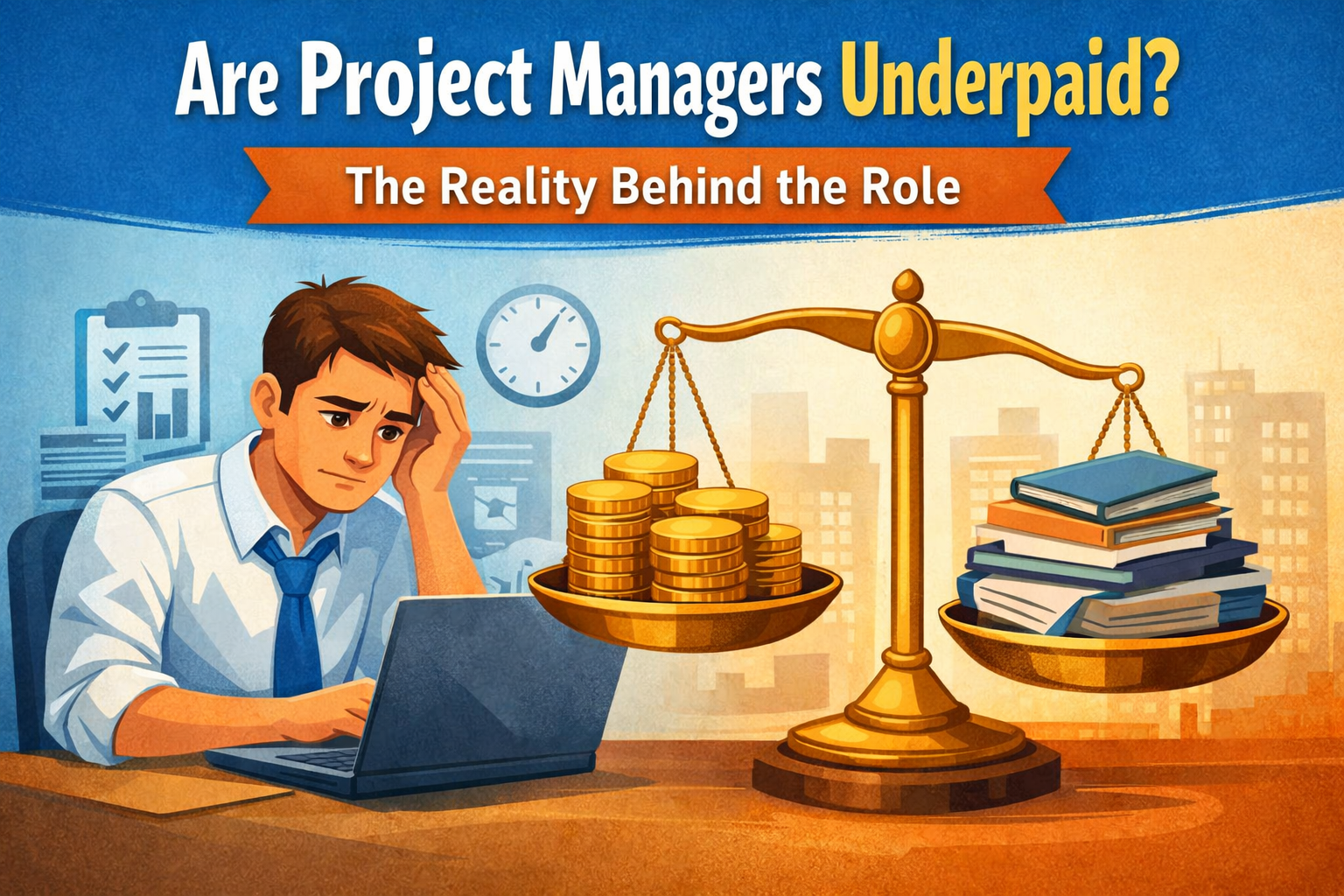
Are Project Managers Underpaid? The Reality Behind the Role
Behind every successful project, there’s someone managing complexity, aligning teams, and ensuring delivery—often without direct authority.
That person is the Project Manager.
But here’s the uncomfortable question many professionals are asking today:
Are Project Managers underpaid for the responsibility they carry?
The Real Scope of a Project Manager’s Role
On paper, project management may seem like coordination. In practice, it’s high-stakes leadership.
A Project Manager is responsible for:
- Delivering projects on time, within scope, and budget
- Leading cross-functional teams without formal authority
- Managing stakeholders across all levels
- Anticipating and mitigating risks
- Handling conflicts, delays, and change requests
- Ensuring business outcomes—not just task completion
This is not just execution—it’s leadership under pressure.
The Salary vs Responsibility Gap
In many organizations:
- Project Managers oversee large budgets and critical initiatives
- They influence team performance and delivery outcomes
- They are accountable for success—and failure
Yet often:
- Salaries align with mid-level operational roles
- Bonuses depend on external factors
- Contributions are less visible than revenue-generating roles
In some cases, specialists earn more while carrying less accountability.
Why Does This Gap Exist?
1. Perception: PMs as Support Roles
Organizations often view Project Managers as coordinators rather than strategic contributors.
2. Invisible Success
- Success = expected
- Failure = blamed
This imbalance reduces recognition.
3. Unclear Role Definition
Many PMs are limited to:
- Task tracking
- Meeting coordination
- Status reporting
Instead of strategic leadership.
4. Market Saturation at Entry Level
With more certifications and new entrants, competition increases—especially at junior levels.
The True Value of a Strong Project Manager
High-performing Project Managers:
- Prevent costly failures
- Align execution with business goals
- Improve productivity and efficiency
- Reduce risk exposure
- Deliver measurable business impact
A great PM often saves or generates far more value than their salary.
So… Are Project Managers Underpaid?
The answer is nuanced:
Sometimes yes—but not universally.
It depends on:
1. Industry
Tech, finance, and large infrastructure projects typically offer higher compensation.
2. Strategic Influence
PMs involved in decision-making earn more than execution-only roles.
3. Personal Positioning
How you communicate your impact directly affects your earning potential.
The Biggest Mistake PMs Make
Many focus on tasks instead of outcomes.
❌ “I managed timelines”
✔️ “I reduced delays by 30%”
❌ “I coordinated teams”
✔️ “I improved delivery efficiency by 25%”
Compensation follows measurable impact—not effort.
How to Increase Your Value (and Salary)
- Move from execution to strategy
- Quantify your achievements
- Specialize in high-value domains
- Understand business metrics (ROI, cost, revenue)
- Strengthen leadership and influence skills
Positioning is everything.
The Future of Project Management
With AI and automation:
- Routine coordination tasks are being automated
- Strategic thinking and leadership are becoming critical
The gap is widening between:
- Low-value PMs (task-focused)
- High-impact PMs (strategy-driven)
Final Takeaway
Project Managers are not underpaid because the role lacks value.
They are underpaid when that value is not clearly demonstrated.
The responsibility exists.
The impact exists.
The opportunity lies in how you communicate it.