

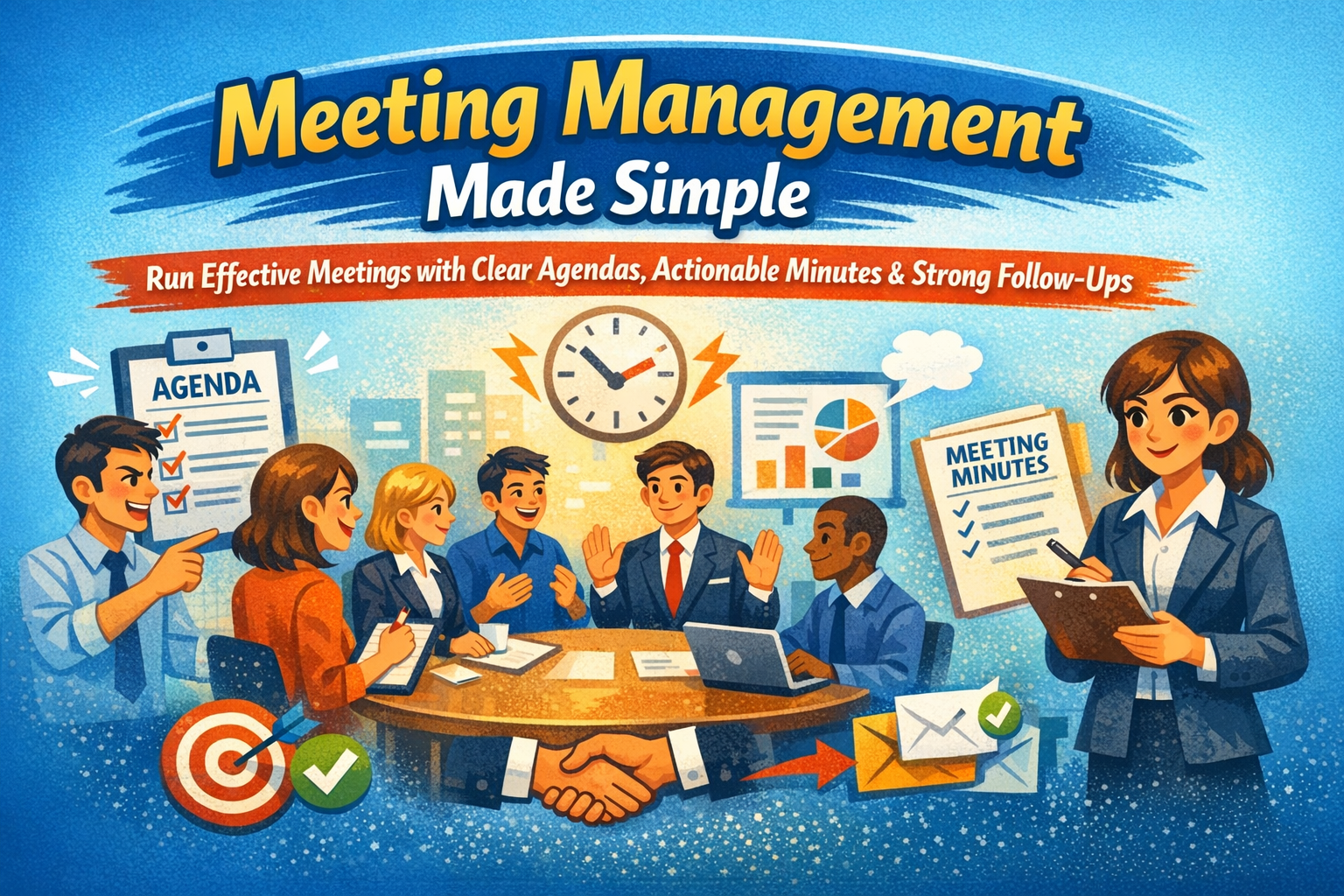
Meeting Management Made Simple: Run Effective Meetings with Clear Agendas, Actionable Minutes & Strong Follow-Ups
Meetings are essential to project execution—but when poorly managed, they become productivity drains. Teams join without clarity, discussions drift, decisions remain unclear, and the same topics resurface repeatedly.
High-performing teams treat meetings as execution engines, not calendar fillers.
A well-managed meeting should deliver three outcomes:
- A clear agenda to guide discussion
- Concise minutes to capture decisions
- Action tracking to drive execution
When these three elements work together, meetings shift from passive discussions to results-driven alignment tools.
Why Effective Meeting Management Matters
In project environments, meetings are where:
- Decisions are made
- Risks are addressed
- Teams align on priorities
- Accountability is assigned
Poorly structured meetings often lead to:
- Unclear objectives
- Off-topic discussions
- Missed decisions
- Weak follow-ups
- Repetitive conversations
Strategic takeaway: Strong meeting discipline directly accelerates project delivery.
The Role of a Clear Agenda
An agenda is the blueprint of a productive meeting. It defines purpose, structure, and time allocation.
A High-Impact Agenda Should Answer:
- What is the objective?
- What topics will be covered?
- Who owns each topic?
- How much time is allocated?
Example (Weekly Project Meeting):
- Project status update
- Risk & issue review
- Blockers discussion
- Action confirmation
Business impact: Better preparation, focused discussions, and efficient use of time.
Why Meeting Minutes Still Matter
Meeting minutes are not documentation for the sake of compliance—they are tools for clarity and accountability.
Effective Minutes Include:
- Meeting details (date, attendees)
- Key discussion points
- Decisions made
- Action items
- Deadlines
Best practice: Keep minutes concise and outcome-focused—not a transcript.
Turning Conversations into Action
Meetings create value only when they lead to execution.
Every action item must clearly define:
- What needs to be done
- Who is responsible
- When it will be completed
Weak vs Strong Action Example:
- “We need to follow up”
- “Rahul will submit the revised budget by Friday”
Impact: Drives ownership, accountability, and measurable progress.
How Agenda, Minutes & Actions Work Together
These are not separate tasks—they form a closed-loop system:
- Agenda → Plans the discussion
- Minutes → Captures outcomes
- Actions → Drives execution
Missing one element weakens the entire meeting.
Best Practices for Professional Meeting Management
Adopt these habits to elevate meeting effectiveness:
- Define a clear purpose before scheduling
- Share agenda in advance
- Start and end on time
- Limit participants to relevant stakeholders
- Capture decisions in real time
- Assign one owner per action
- Review previous actions in the next meeting
Outcome: Improved efficiency, stronger accountability, and better team alignment.
Common Meeting Mistakes to Avoid
Even experienced teams fall into these traps:
- Scheduling meetings without clear objectives
- Over-documenting minutes (too detailed, unreadable)
- Ending meetings without confirming actions
- Inviting unnecessary participants
- Ignoring follow-ups
Insight: Poor meetings don’t fail immediately—they fail through repetition.
Final Thought
Meeting management is not an administrative task—it’s a core leadership skill.
Agenda defines direction
Minutes capture clarity
Actions ensure progress
When executed with discipline, meetings become decision-making accelerators that move projects forward with confidence and control.